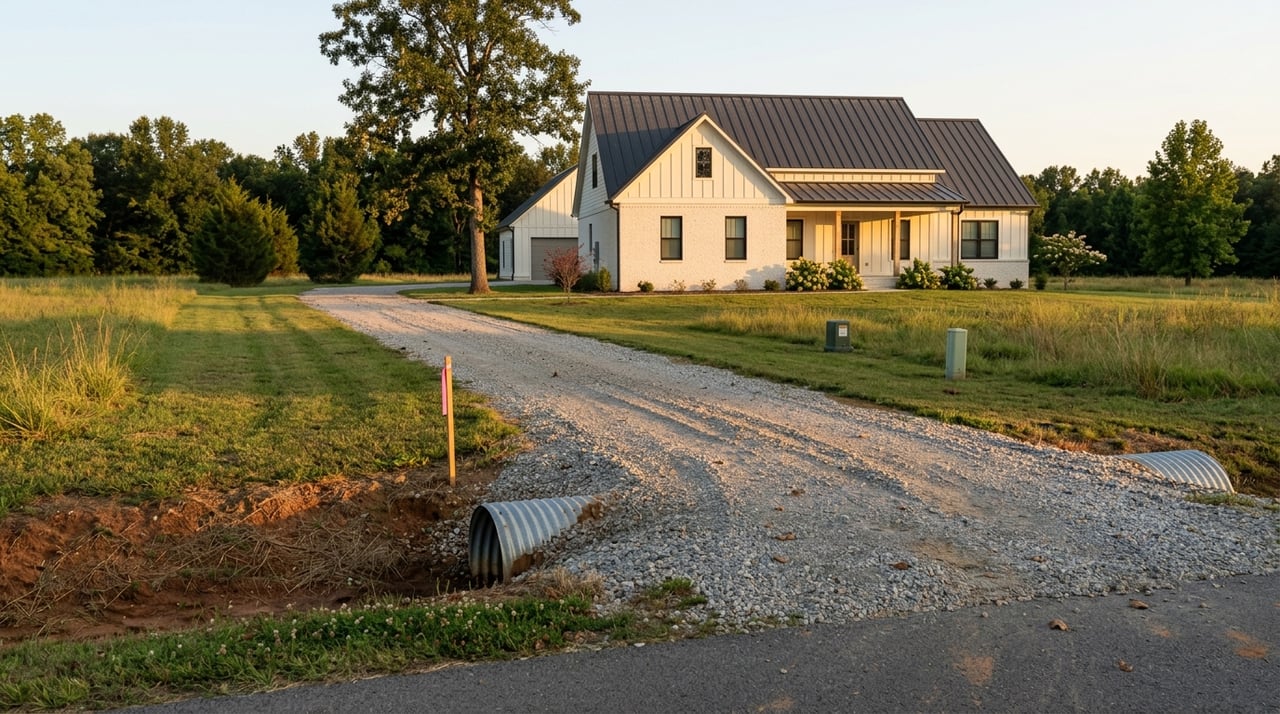
Buying land in Summertown can feel exciting right up until the practical questions start piling up. Does the property have legal access? Can you get water there? Will the soil support a septic system? If you are thinking about buying land or acreage in Summertown, Tennessee, the good news is that a little due diligence can save you from a very expensive surprise. In this guide, you will learn the key issues to check before you make an offer, what local offices and utility providers can tell you, and how to approach financing with confidence. Let’s dive in.
Why Summertown acreage needs a careful review
Summertown is a census-designated place rather than an incorporated city, which means acreage purchases are often more about the individual parcel than a broad town-wide zoning framework. In practice, that puts the focus on property-specific details like access, floodplain status, septic feasibility, water availability, and title.
That is important because two parcels that look similar online can come with very different risks and costs. One may have public water nearby and road frontage, while another may need an easement, utility extensions, and additional site work before it is ready to build on.
Start with access and road frontage
One of the first things to verify is how you legally and physically get to the property. Lawrence County’s Highway Department maintains 1,025 miles of county roads, but not every parcel necessarily fronts a county-maintained road.
If a property depends on an easement, private road, or shared driveway, you will want to understand that before closing. Access questions can affect financing, future building plans, and even your day-to-day use of the land.
Questions to ask about access
- Does the parcel have recorded legal access?
- Does it front a county-maintained road?
- Is access through an easement or private road?
- Will you need driveway approval for your intended use?
Check water availability early
Water service in Lawrence County can vary by parcel. The county says nine water providers serve the county, including Summertown Utility District, and some areas may still need line extensions.
That means you should never assume water is already available just because nearby homes are connected. Confirm the exact provider for the parcel, whether a tap is available, and whether extension costs may apply.
Summertown Utility District says it has served the area with drinking water since the mid-1960s. Its posted schedule updated August 1, 2024, lists residential water rates starting at $18.25 for the first 1,500 gallons plus tax and a $50 nonrefundable service fee.
Those costs may be minor compared with larger land-development expenses, but they still matter. If public water is not available, you may need to explore a private well instead.
What to know about private wells
Private drinking-water quality is not regulated the same way as public water systems in Tennessee, even though well construction is regulated. The Tennessee Department of Health recommends annual testing for pathogens and testing for chemical contaminants at least every other year, or more often if nearby land use could affect water quality.
For buyers, that means a well can be a workable option, but it should come with a realistic plan for testing and long-term maintenance.
Septic can make or break the deal
For many rural properties, septic is the biggest wildcard. A beautiful piece of land is not necessarily a buildable homesite if the soil or site conditions do not support the type of septic system you need.
TDEC says a septic permit should be obtained before dirt work or construction of a building pad. It also notes that alternative systems may be needed when site conditions are not favorable for a conventional system.
This is one reason it helps to ask septic questions before you commit. If the property has not been evaluated, you may want to understand that risk before moving forward.
Septic questions worth asking
- Has the property already been evaluated for septic?
- Is there an existing septic permit on file?
- Would the site likely need a conventional or alternative system?
- Is your intended home site in the same area that would support septic approval?
TDEC also says that before an electrical inspector can process a new-service request, the inspector must receive written notice that the home is served by public sewer, that a septic permit has been applied for, or that an existing septic system will be used. That makes septic planning an early step, not a last-minute detail.
Floodplain status matters more than many buyers expect
Floodplain status is another issue to check early. Lawrence County adopted a floodplain zoning resolution in 1988 and updated the maps in 2017. County records also state that Lawrence County participates in the National Flood Insurance Program and that building permits are required for construction in flood zones.
Even if you are not planning to build right away, floodplain status can shape the future use of the land. It can affect where a home, barn, driveway, or septic system can go, and it may influence insurance and permitting requirements later.
Confirm title, plats, and boundary details
Rural land purchases need strong title and survey review. The Lawrence County Register of Deeds is the official record keeper for deeds, deeds of trust, liens, plats, and related records.
The office notes that it can provide recorded plats for subdivision property, while the Assessor can provide tax and aerial maps for acreage property. Those assessor maps can be helpful for general reference, but they are not official surveys.
That distinction matters. If you want to know the true boundary lines, whether there are encroachments, or whether access is properly recorded, you will likely need the right survey and title work.
Key title and survey checks
- Is there a recorded plat for the property?
- Are there any liens or title exceptions to address?
- Are the boundaries clearly identified?
- Are there encroachments or access issues?
The Register of Deeds also notes that liens or mortgages require a title search by an attorney or title company. On acreage, that extra diligence is often money well spent.
Understand future split potential
Some buyers want land for a home now and flexibility later. If that is your goal, it helps to know how future divisions may be treated when septic is involved.
TDEC says a subdivision evaluation is required for tracts divided into two or more lots, sites, or divisions for immediate or future construction where septic will be used. It also says a survey and soils map must be submitted first.
There is an important exception. TDEC states that a division into tracts of 5 acres or larger is not considered a subdivision for this purpose. If future splitting is part of your long-term plan, ask early how that may affect the property you are considering.
Look at utility readiness beyond water
Water and septic get most of the attention, but they are not the only service questions to answer. Electric service should be confirmed by address rather than assumed, especially near county-line service boundaries.
TVA says it sells power through local power companies and lists Mount Pleasant Power System as serving parts of Maury and Lawrence counties. For a Summertown-area parcel, the exact provider and service cost should be verified before closing.
Trash service is another practical issue that buyers sometimes overlook. Lawrence County says residents outside Lawrenceburg, Loretto, Ethridge, and St. Joseph can contract with private waste haulers or take household trash to the county transfer station.
That may not change whether you buy the land, but it does shape what daily life on rural acreage will look like.
Greenbelt may help qualifying acreage owners
If you are buying a larger tract, you may want to ask whether it could qualify for Tennessee’s Greenbelt program. According to the Lawrence County Assessor, agricultural land generally needs at least 15 acres, with some 10-acre exceptions, and forest land generally needs at least 15 acres. The filing deadline is March 1.
For qualifying properties, Greenbelt can lower assessed value. Since eligibility depends on the land and its use, it is worth checking the details for the specific parcel rather than assuming it will apply.
Land financing is different from home financing
Acreage financing is often not the same as getting a traditional mortgage on an existing home. The right loan type can depend on whether you are buying raw land, buying land to build soon, or purchasing farmland for agricultural use.
Some lender examples show that vacant-land loans may be limited to buildable parcels and may come with acreage or loan-to-value limits. That is why down payment, term, reserve requirements, and buildability questions should come up early in your process.
USDA pathways may also matter in some situations. Research sources note that FSA farm ownership loans may help eligible farmers and ranchers purchase farmland, while USDA guaranteed farm loans are designed for family-size farmers and ranchers who cannot obtain commercial credit. USDA Rural Development Section 502 direct home loans are different and are intended for purchasing or building homes in eligible rural areas, including site preparation such as water and sewage facilities.
Financing questions to ask upfront
- Is this a vacant-land loan, construction-to-permanent loan, or farm ownership loan?
- What down payment is required?
- Does the lender require the parcel to be buildable today?
- Are there acreage limits or appraisal rules?
- What reserves or timelines should you expect?
A practical Summertown land checklist
Before you move forward on a parcel, focus on the items that most often decide whether the deal still makes sense.
- Confirm legal access
- Verify road frontage or easement details
- Check water availability and possible extension costs
- Ask about septic permits or site evaluation
- Review floodplain status
- Order proper title work and survey review
- Confirm the electric provider for the exact parcel
- Ask whether the acreage may qualify for Greenbelt
- Match your financing to the way you plan to use the land
Buying acreage in Summertown can be a smart move if you go in with clear information and realistic expectations. The right property is not just about pretty views or the number of acres. It is about whether the land supports your goals, your budget, and your timeline.
If you want practical guidance on evaluating land in Summertown or anywhere around Lawrence County, Heidi Osterheld can help you ask the right questions, spot red flags early, and move forward with confidence.
FAQs
What should you check first when buying land in Summertown TN?
- Start with legal access, water availability, septic feasibility, floodplain status, and title review because those issues often determine whether a parcel will work for your plans.
Does every land parcel in Summertown TN have public water access?
- No. Lawrence County says water service can vary by parcel, and some areas may still require line extensions, so you should confirm service availability before closing.
Do you need a septic permit before building on acreage in Summertown TN?
- Yes. TDEC says a septic permit should be obtained before dirt work or construction of a building pad, and septic planning is often a key early step for rural land.
How do you verify property boundaries on acreage in Lawrence County TN?
- The Register of Deeds can provide recorded plats for some properties, and the Assessor can provide tax and aerial maps, but those maps are not official surveys.
Can acreage in Lawrence County TN qualify for Greenbelt?
- It may. The Lawrence County Assessor says agricultural land generally needs at least 15 acres, with some 10-acre exceptions, and forest land generally needs at least 15 acres, with a filing deadline of March 1.
Is financing land in Summertown TN different from financing a house?
- Yes. Vacant-land financing often has different requirements than a standard home mortgage, so you should ask early about down payment, buildability, loan type, and acreage limits.